From Atlanta to San Diego: Insights from AFP ICON 2026
After a cross-country flight from Atlanta to San Diego, Susannah Darrow arrived at the 2026 AFP ICON conference to find a sector in the midst of a massive transformation. The air in San Diego wasn't just filled with salt and sand, but with the buzzings of a new era in fundraising.
The "business as usual" approach to donor engagement has officially retired. In its place is a landscape dominated by AI, shifting tax codes, and a historic transfer of wealth.
Here are her takeaways.
The Great Pivot: Individual Giving & AI
The most striking takeaway from this year’s conference wasn’t just what was said, but what was noticeably absent. While the sessions were dominated by the intersection of Individual Giving and AI, there was a stark decline in content dedicated to traditional grant-seeking and corporate giving—strategies that have historically been key pillars of organizational funding models.
This shift is a clear indicator of where the sector’s mindshare currently resides, but it also signals a potential blind spot. While AI-enhanced individual giving is a powerful lever for growth, it is not a "quick fix." For organizations just beginning to build these programs, it’s vital to remember that individual giving requires significant time, intentionality, and sustained effort to mature.
Ultimately, organizational resilience cannot be built on a single fundraising channel. True stability stems from a diversified revenue model—one that integrates emerging tech without abandoning the foundational networks and capacity you’ve already worked hard to establish.
For those who haven’t yet prioritized individual giving, the time to build that infrastructure is now. For those with established programs, the opportunity lies in leveraging transformative technologies to scale your reach and deepen donor relationships. While the current volatility of public and corporate funding is a stark reminder of the risks of over-reliance, it isn't a new lesson. We have always known that grants and sponsorships alone cannot secure our future; a robust, multi-channel strategy is the only way to ensure long-term sustainability.
At this year’s ICON, the message was clear: The era of "business as usual" for donor engagement is over.
The AI Mandate: We view AI not as a replacement for staff, but as a force multiplier for personalization. If your organization is not "findable" by Large Language Models (LLMs), you may effectively be invisible to the next generation of donors.
The Diversification Trap: Because grants and corporate giving took a backseat on the main stage, there is a risk of viewing them as "legacy" channels. Our stance: Do not abandon these pipelines. They remain essential for a diversified revenue model, even as we lean into individual donor strategy.
Sector Trends: The Fragility of the Donor Base
Data from the Fundraising Effectiveness Project (FEP) reveals a "consolidation" risk. While total dollar growth is up, it is increasingly driven by a smaller number of high-capacity donors and Donor Advised Funds (DAFs).
Donor Erosion: Support from "micro-level" donors (the bedrock of community resilience) is dropping.
The Retention Challenge:
Retention Rate: Currently flat, with a "bottoming out" of loyal donors.
The Gap: Only 19% of one-time donors currently convert to recurring donors.
The "Golden Window": The first 30–90 days after a first gift are critical. If we don’t engage them here, we lose them.
(Data cited from “Planting Seeds of Change: Leveraging Data Insights From FEP Q4 2025 for Enhanced Fundraising Effectiveness.” Mike Kinney, Tim Sarrantonio, Alice Ferris, Woodrow Rosenbaum)
Regulatory Alert: Navigating the "OBBA" Tax Changes
2026 marks the most significant shift in tax policy in decades. These changes impact not just if people give, but the timing and structure of their contributions.
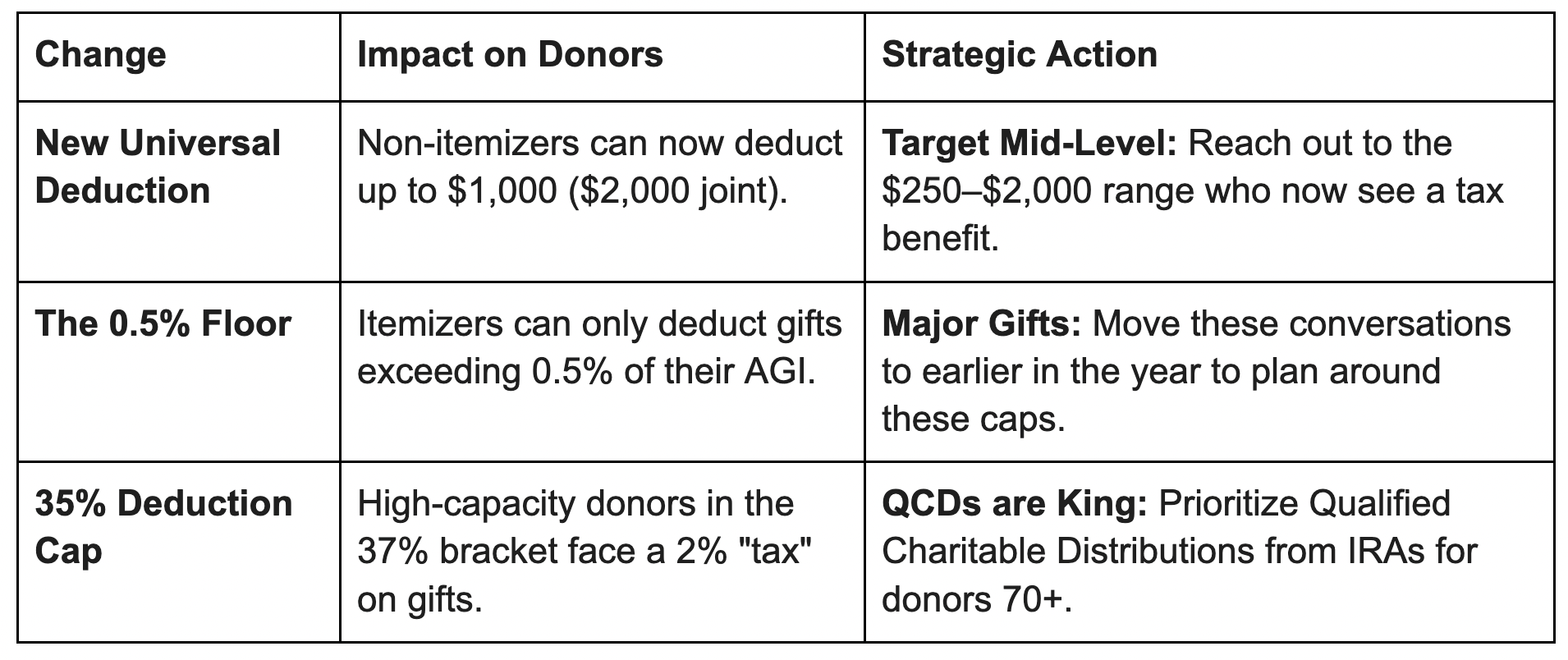
(Data cited from “Policy, Practice, and Power: Turning Federal Change Into Fundraising Strategy.” Benjamin Mohler, Sally Schaeffer, Dan Blakemore, Roy Jones)
Modern Marketing: The "Always-On" Model
Donors now expect a seamless, "frictionless" experience. A third of donors cite technical simplicity and clear messaging as their primary reasons for increasing support.
From "Campaign" to "Content": Shift from buying lists to high-quality storytelling. Think like a content creator—using "newsjacking" to stay relevant in current cultural conversations.
Technical Optimization: Ensure your donation buttons default to monthly giving. AI-supported personalization is no longer optional; it can increase gift frequency by up to 32%.
AI Searchability: We must optimize your digital footprint so that when a donor asks an AI assistant for "top nonprofits in [Your Sector]," your organization is the first recommendation.
(Data cited from “Donor Acquisition: Expert Insights on Activating Today’s Supporters” Kimberly O’Donnell, Benjamin Miller, Mike Kinney, Lawrence Swiader; “The State of Recurring Giving 2026” Dana Snyder)
The $105 Trillion Opportunity: Wealth Transfer
We are entering the zenith of the greatest wealth transfer in history. By 2045, an estimated $18 Trillion will reach the nonprofit sector.
Women & Legacy: Much of this wealth will come from the "second to die" (statistically women). Cultivation and financial education for Boomer women is our most significant long-term opportunity.
Endowment Fundamentals: You must have healthy operating reserves before building an endowment. We recommend managing endowments on a "total return" basis and moving unused draws into a "quasi-endowment" to ensure compounding growth.
(Data cited from “Leveraging the Great Wealth Transfer to Build Endowment.” Laura MacDonald, Elise Webster)
Immediate Steps to Strengthen Your Strategy
Reactivate the Mid-Level: Launch a targeted campaign for donors in the $500–$2,000 range to leverage the new Universal Deduction.
Audit for "AI Findability": Ensure our website and impact data are structured for LLM discovery.
The Monthly Default: Update all digital touchpoints to make recurring giving the primary option.
Legacy Ask: Begin formalizing "Legacy + Sustainability" messaging. Avoid individual names for legacy societies to ensure long-term inclusivity.
As the landscape of philanthropy shifts toward an AI-driven, data-rich future, the organizations that thrive will be those that balance technological innovation with the timeless art of storytelling. By staying agile in the face of tax changes and prioritizing the donor experience, we can turn these industry pivots into lasting growth.
If you are looking to navigate these new regulatory changes, optimize your digital presence, or build a robust legacy giving program, we are here to help. Contact us to discuss how we can refine your fundraising strategy and ensure your mission remains "findable" and impactful in the years to come.
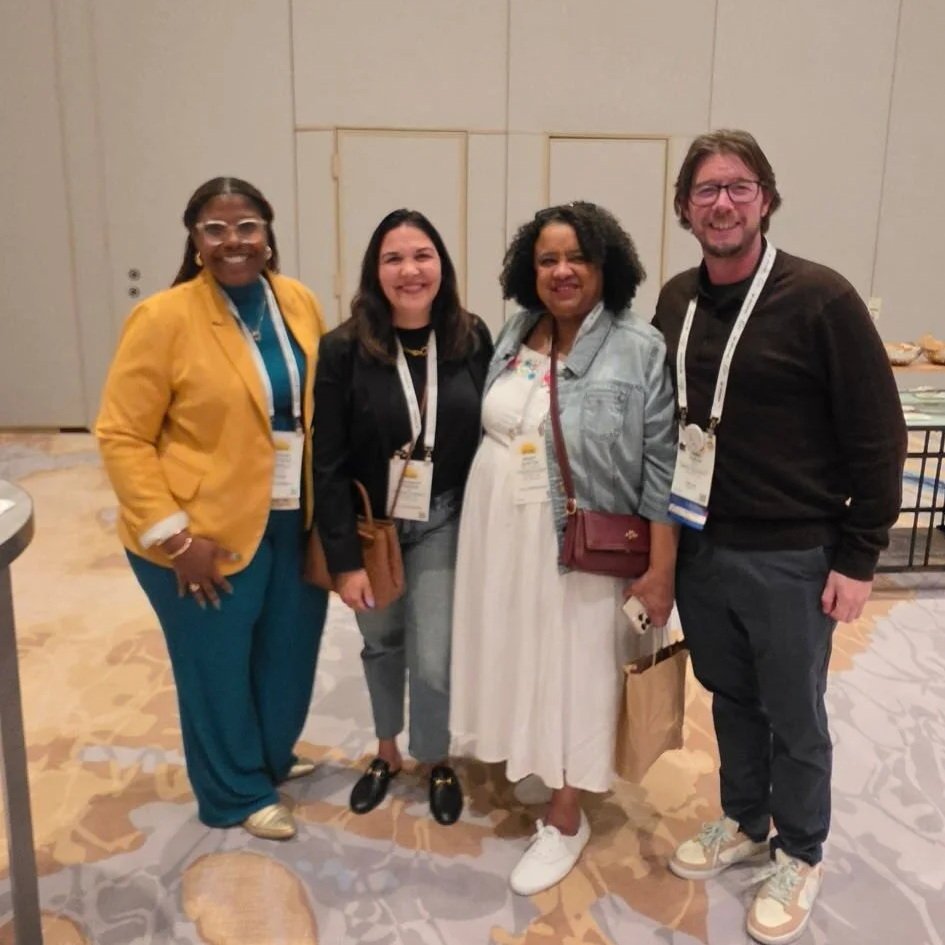
Atlanta Chapter reception. From left to right Autumn Lee-Cass (Chair Elect), Susannah Darrow (AFP Atlanta President & Founding Partner of Purpose Possible), Birgit Smith Burton (AADO, Past Chair of AFP Global and Atlanta chapter), and Jamie Tobias (Emory University, Past Chair of the Atlanta Chapter and current AFP Global Board member).