ART, ACCESS, & EQUITY
Our Work on the Beltline Facade pARTnership Grant
Client: Atlanta Beltline
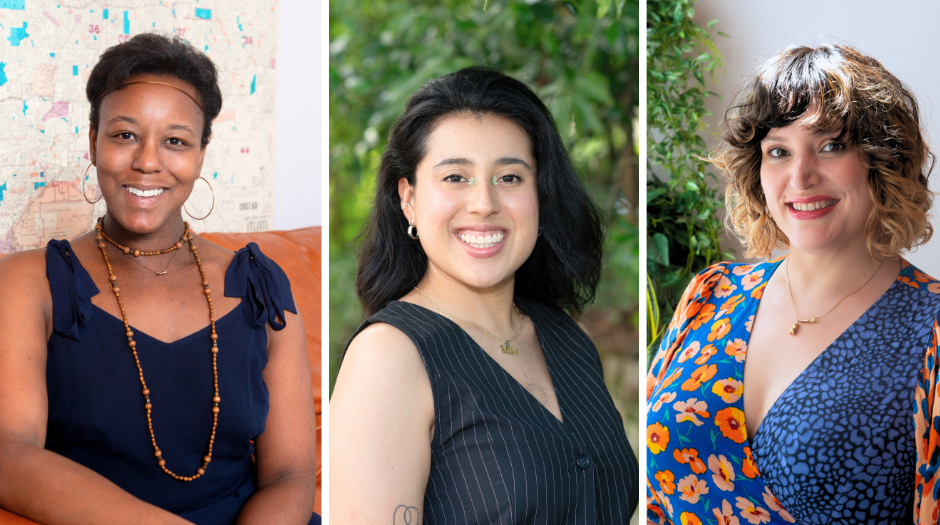
Consultants: Taryn Janelle, Natalia Garzón Martínez, Audrey Gámez
Project Term: 2024 - 2026
When the Purpose Possible team met with the Atlanta Beltline in 2024 to talk through their Facade Improvement pARTnership Grant, it was clear from the start that this project would call for some innovation and true hive-mind collaboration.
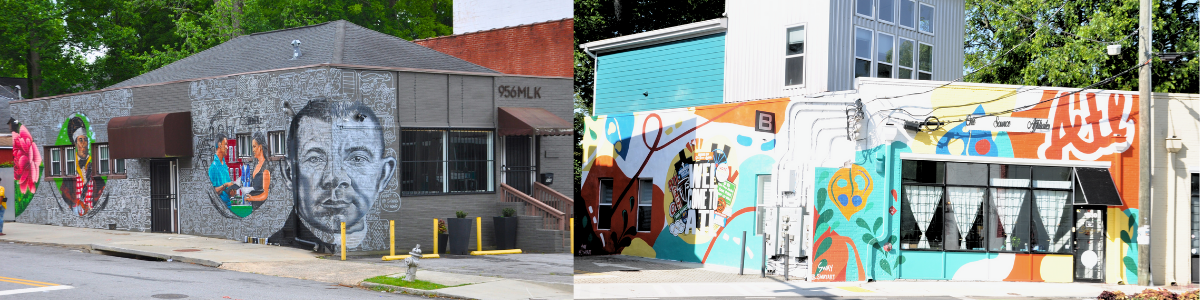
The Atlanta Beltline asked us to manage a grant program that would direct funds to local artists, pairing them with selected businesses to enhance storefront facades.
In addition to structuring the grant program logistics and workflow, our team was tasked with a key priority—making sure artists were treated equitably and that their needs stayed at the center of every decision in the grant process.
Across the two cycles of this ongoing project (2024-25 and 2025–26), we created several steps to ensure artists were supported, treated fairly, and recognized for their work.
Information Sessions: Creating Transparency
For both rounds, we hosted information sessions before the application opened. These were designed to guide artists through the entire process, from requirements and documentation to timelines and expectations. These virtual sessions allowed for questions and honest conversation about the grant objectives.
In the second round, we added a peer-learning element by inviting two artists from different mediums who had completed the process in the previous round. Their on-the-ground experience and candid reflections about the grant process helped set newer artists at ease and offered a real look at what participation entailed.Site Visits: Building Confidence
In the second cycle, we added a new step, in-person site visits with the finalists before proposal submissions. This allowed finalists to meet business owners, explore the location firsthand, and understand the space that might become their future canvas. It also created a more equitable process, ensuring all finalists received the same information, reducing the chance of uneven guidance. Though it required extra logistics on our end, the clarity and connection it created were well worth it.
It was important to build confidence in artists, giving them all the opportunities possible to meet the business owners, ask their own questions, and better envision their work before completing proposals.Contractor Assistance: Offering Access
Many of the facade improvements for businesses require electrical or construction work that requires additional services outside of our artists’ area of expertise. To further support the artists with this portion we brought in Skanska, a construction and development company, to join the site visits with the artist finalists and make themselves available for one-on-one questions. We knew many artists might not have experience securing quotes or navigating contractor needs that could impact both their designs and budgets. By giving artists direct access to Skanska, we aimed to demystify that part of the process and ensure they had access to the right guidance to build their proposals with confidence.
Artist Stipend: Ensuring Equity
Every finalist who submitted a proposal received a stipend for their time and work. Artists often juggle multiple commitments, and it was important to recognize the significant effort (both time and talent) that goes into site visits, applications, and proposal development. Providing compensation for those who made it to the final round but were not ultimately selected was a small but important way to honor their labor and reinforce the commitment to equity.
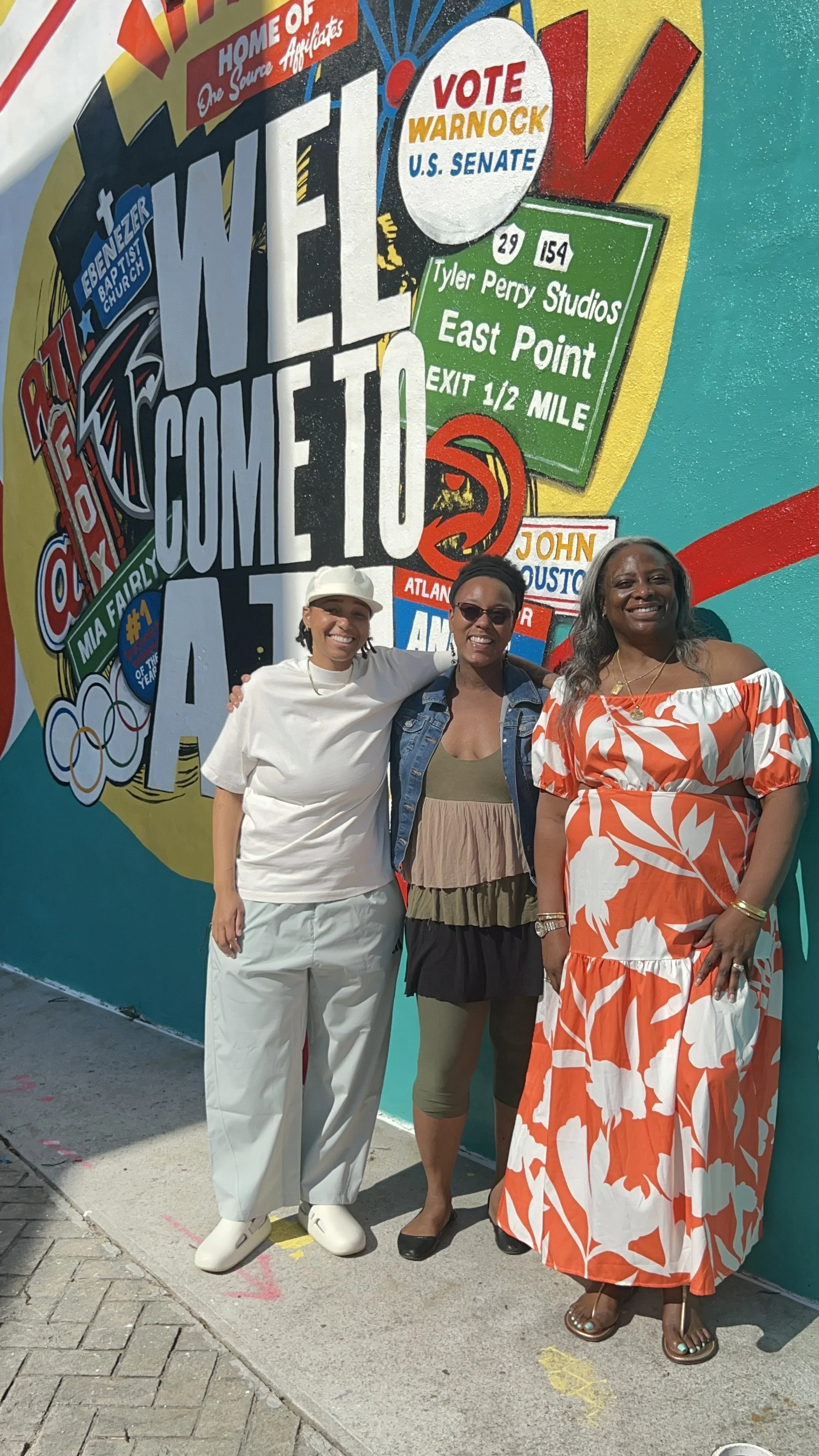
Artist Sway, Taryn Janelle, and local business owner.
At the heart of all these efforts was one simple belief—artists deserve systems that support them, not just at the finish line but throughout the entire journey. If we are to invest in the benefits of art in our city, we must also invest in the people whose labor and time make that possible.
By building trust, creating clearer processes, and showing up as advocates along the way, we worked with the Atlanta Beltline to ensure that this project wasn’t just about completed facades—it was about strengthening relationships and setting artists up to thrive in every phase of the work.